AI can generate 100 ads. That's the problem.
AI-powered ad testing for AI-generated creative: 6-question preflight checklist + comparison of creative pre-testing tools (Kantar, System1, Chorus).
Thoughts on AI simulation, product updates, and research insights.
AI-powered ad testing for AI-generated creative: 6-question preflight checklist + comparison of creative pre-testing tools (Kantar, System1, Chorus).
Anthropic researchers discovered a neural 'axis' that controls AI personality. Here's what it means for anyone building with LLMs.
Fast marketing research with audience perspectives: use a 3-2-1 loop for rapid creative testing instead of waiting weeks for traditional panels and focus groups.
Most teams test 2-3 message variants and call it a day. Here's how to test dozens of messaging options affordably using audience segment modeling.
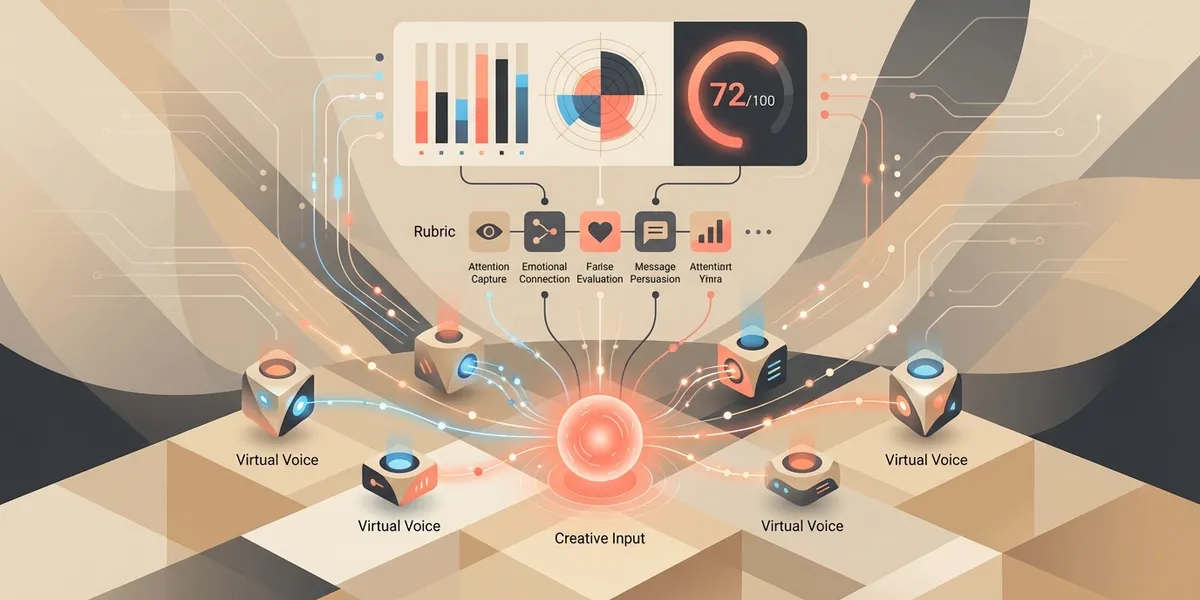
Testing Kits are creative testing tools with pre-configured scoring rubrics for ad pre-testing and content evaluation. Run AI creative tests in one click.
Compare AI creative testing tools: Chorus offers AI scoring (Quick Check), audience panels (Audience Panel), and creative audit (Analysis) for ad pre-testing. See how it compares to Kantar and Zappi.
New research shows value profiles predict individual preferences better than demographics. Here's what that means for AI-powered marketing.
What are audience perspectives for creative testing? Segment-level viewpoints that evaluate ads and content before launch. See how pre-launch audience intelligence works.
AI video analysis explained: how Chorus evaluates attention, pacing, brand presence vs System1. See a real Coinbase ad breakdown with 8-dimension audit.
AI ad pre-testing explained: Quick-check uses audience perspectives for predictive creative testing. See a real Coinbase ad report with scores, issues, and fixes.
Audience panel reports explained: how segment-level perspectives evaluate your creative, what's in a Chorus report, and why structured audience intelligence beats traditional research.
Conformity bias distorts focus group feedback in predictable ways. Here's what five peer-reviewed studies reveal about the problem—and what alternatives exist.
New research reveals that advanced reasoning models succeed by simulating internal debates among diverse perspectives, not by simply computing more steps.